

Stories from a Global Career
Throughout his career, Simon Penney has worked under several business names and held senior professional, regulatory and academic roles.
Every role and assignment has a distinct story of places, people, challenges and opportunities for practical change.
This collection shares some of these stories, illustrating Simon’s experience in waste management, the circular economy, climate change and international development.
The organisations below may have engaged or employed Simon, joined a wider programme, or received support through an assignment commissioned by another organisation. Inclusion does not imply a current commercial relationship or endorsement.
Supporting Post-Tsunami Recovery in Eastern Sri Lanka
Working with the Japan International Cooperation Agency, the Government of Sri Lanka and Kalmunai Municipality, Simon supported waste and resource-management initiatives after the 2004 Indian Ocean tsunami.
The work included:
- Assessing local environmental conditions
- Identifying practical waste-management improvements
- Supporting livelihoods linked to waste recovery and resource use
- Contributing to environmental assessments
- Balancing immediate recovery with long-term development
The assignment took place in politically unstable eastern Sri Lanka, where communities were recovering from the tsunami amid a long-running civil conflict.
This complex environment demanded cultural sensitivity, adaptability and recognition that waste management extends beyond infrastructure to livelihoods, resilience, public health, environmental protection and long-term recovery.
“Thank you for your participation and cooperation for our tsunami project. Though the allocated time was limited, you covered a wide scope of work and compiled the required information for preparation of the implementation program.”
Toshikazu Tai, Team Leader, RRDP-NE Tsunami Relief Projects, Japan International Cooperation Agency, Sri Lanka

Supporting New Plastics Regulations in Grenada
In 2022, Simon supported the Government of Grenada on work commissioned by the International Union for Conservation of Nature under its Plastic Waste Free Islands initiative.
The assignment supported stakeholder engagement on introducing and implementing new packaging and single-use plastics regulations.
Combining desk research with fieldwork in Grenada, it identified the legislation’s practical implications for government, businesses and other stakeholders.
Simon also developed and delivered specialist training for businesses and corporate stakeholders, covering:
- The legislation’s background and purpose
- Regulatory responsibilities
- Practical implementation approaches
- Business preparedness
- Compliance and enforcement
- The transition from problematic plastics
The project demonstrated Simon’s ability to turn environmental policy and legislation into practical guidance, helping regulators, businesses and communities understand what was changing and how to support implementation.
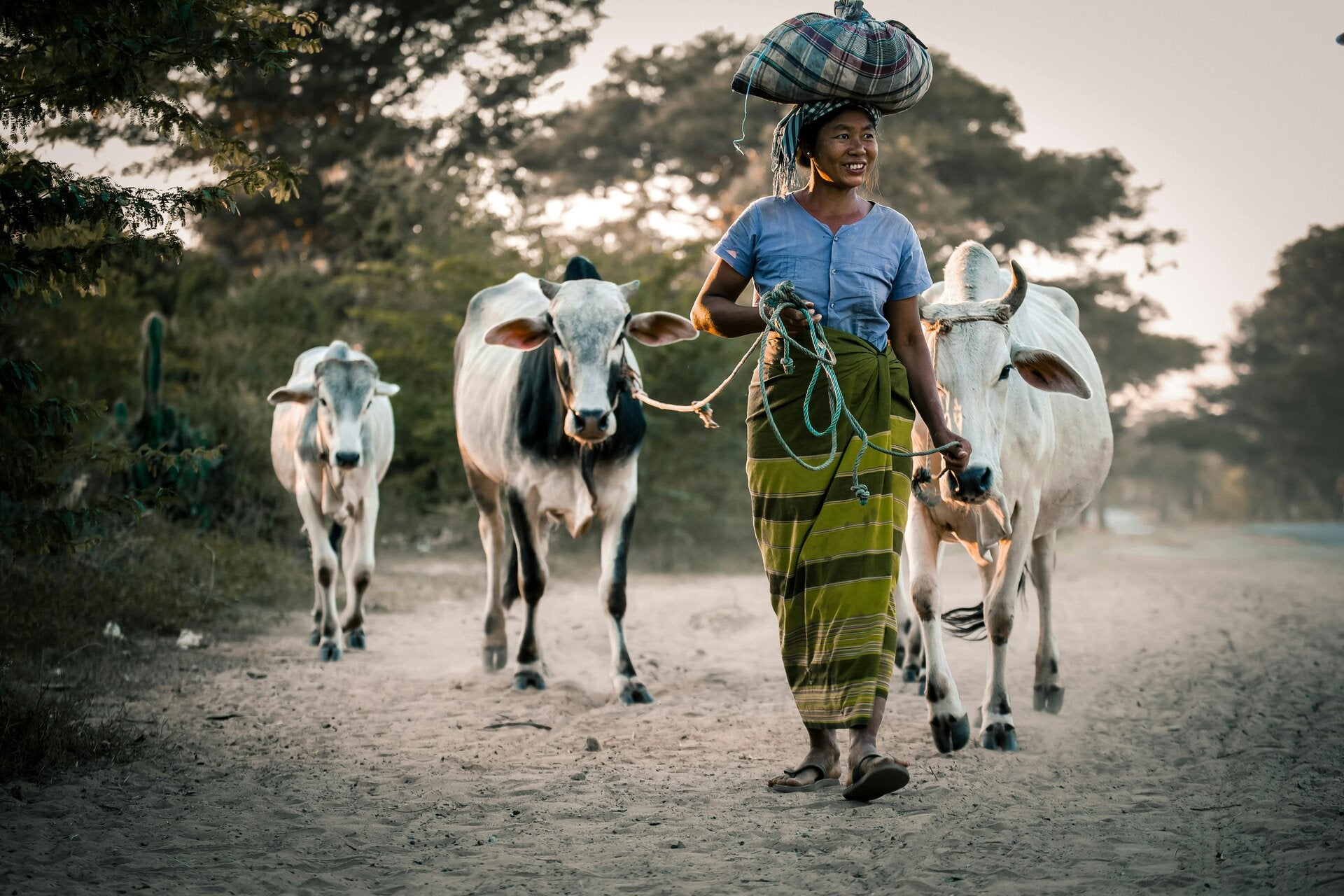
Understanding Livestock’s Wider Carbon Impact in Rural Uganda
Simon worked with Ripple Effect UK—then Send a Cow—to assess greenhouse-gas emissions from its livestock-based rural-development work in Uganda.
The project used carbon accounting beyond livestock’s direct emissions, considering their role in the wider agricultural and community system.
While livestock, especially cattle, can produce significant emissions, the assessment found that careful introduction and management could help reduce net emissions overall.
Potential benefits included:
- Improved soil fertility through manure
- Higher agricultural yields
- Better use of local resources
- Less reliance on imported inputs
- Less need for long-distance food transport
- Improved land management and carbon sequestration
- Greater food security and livelihood resilience
The work showed why environmental impacts must be assessed across whole systems, rather than from a single emissions source in isolation.
When appropriately selected, managed and integrated into regenerative farming, livestock emissions may be partly or fully offset by wider reductions and sequestration elsewhere in the system.
These programmes also strengthened food security, livelihoods and resilience in rural communities.
Simon continues to work on greenhouse-gas accounting, climate change, and the environmental consequences of waste and resource management.
Though often overlooked, these issues are essential to understanding the climate impact of materials, food production, organic resources and international-development interventions.

Metro Vancouver Wood Waste Strategy, Canada.
Through his former practice, Promise Consulting, Simon Penney contributed to a 20-year strategic assessment of wood-waste management for Metro Vancouver.
The work combined GIS spatial analysis, material-flow and systems assessment, infrastructure planning, logistics and end-market development. It examined wood-waste sources; collection and separation; required transfer and processing infrastructure; transportation and catchments; and markets supporting long-term recovery.
The assessment recognized distinct streams, from clean lumber and pallets to engineered, painted and treated wood. It considered differentiated collection, processing, quality control and market routes, rather than treating wood as a homogeneous material.
A central focus was the relationship between regional infrastructure and sustainable market demand. Potential outlets were assessed within a resource hierarchy: prevention, salvage, reuse, remanufacture, recycling, biomass applications and controlled management of unsuitable residuals.
Simon also supported dissemination through stakeholder workshops. These sessions communicated findings, gathered practical insight, tested assumptions and encouraged understanding of the infrastructure, operational and market changes required. They connected the technical assessment with the experience and priorities of organizations generating, collecting, processing, regulating and using recovered wood.
The resulting framework linked long-term policy ambitions with stakeholder knowledge and the facilities, logistics, market capacity and implementation sequencing needed for a resilient regional wood-resource system.

Higher Education and Curriculum Development
During his doctoral studies at Queen’s University, Ontario, Canada, Simon Penney developed teaching materials and taught undergraduate Environmental Science. He also completed a postgraduate pedagogy course, strengthening his expertise in curriculum design, inclusive teaching, assessment and effective educational practice.
Simon later developed and delivered postgraduate materials for Conestoga College and Fleming College in Ontario. Drawing on extensive experience in waste and resource management, environmental policy, sustainability and the circular economy, his teaching connected academic principles with professional practice and real-world case studies.
As a guest lecturer at the University of British Columbia, he has shared specialist knowledge and practical insights with university students.
This blend of curriculum development, undergraduate and postgraduate teaching, pedagogical study and guest lecturing demonstrates Simon’s ability to make complex environmental subjects accessible, engaging and professionally relevant.
Additional Stories
Further examples from Simon’s international career will be added over time.
Create Your Own Website With Webador