

Simon as a Global Voice
Looking back, it is interesting to see how Simon's work and ideas have contributed to wider environmental and waste-management conversations.. Three examples stand out.
The Economist - 2008, Research Simon authored for international development charity Send a Cow — now Ripple Effect — featured in The Economist article “The problem with breathing.”
The work assessed the greenhouse-gas impact of providing cattle to African farming families. It considered the wider system: animal diet, tree planting, carbon sequestration and manure returned to soils, not just livestock emissions. As reported by The Economist, the programme's cows were calculated to be doing approximately 2.5 times more environmental good than harm. Read the report

The Guardian — 2014
Six years later, he joined The Guardian's Global Development Professionals Network discussion on innovative global waste-management solutions, with an international panel from development, finance, waste and environmental organisations.
The Guardian's “12 ways to tackle global waste” feature highlighted two recommendations: the Global North must listen to and learn from the Global South, and international networks linking waste research and expertise need strengthening.
These principles still guide his international waste and circular-economy work.
Expert panel:
12 ways to tackle global waste:
Wiley — 2020
In 2018, He wrote “Is Waste Hierarchy a Misleading Principle?”, questioning whether this established framework addresses consumption and the economic, political and social structures that create waste.
The article prompted a direct response from Ad Lansink, whose work created the internationally recognised “Lansink's Ladder”.
The debate entered professional and academic literature. Antonis Mavropoulos and Anders Waage Nilsen discussed and formally referenced Simon's argument in the Wiley book Industry 4.0 and Circular Economy: Towards a Wasteless Future or a Wasteful Planet?
Read the Wiley chapter:
Original article:
A common thread runs through all three pieces.
Environmental problems rarely exist in isolation. Climate, waste, consumption, poverty, livelihoods and social justice are interconnected. Effective policy must look beyond individual technologies and headline metrics to understand the whole system — including the people within it.
Nearly two decades after the Send a Cow research, this thinking remains central to Simon Penney Waste Consulting.
#CircularEconomy #WasteManagement #InternationalDevelopment #ClimateChange #Sustainability #EPR #ThoughtLeadership
Plastic Pollution, Waste Management and the Circular Economy
Simon Penney was a contributing author to the peer-reviewed paper Plastic Pollution, Waste Management Issues, and Circular Economy Opportunities in Rural Communities, published in the international academic journal Sustainability in 2022.
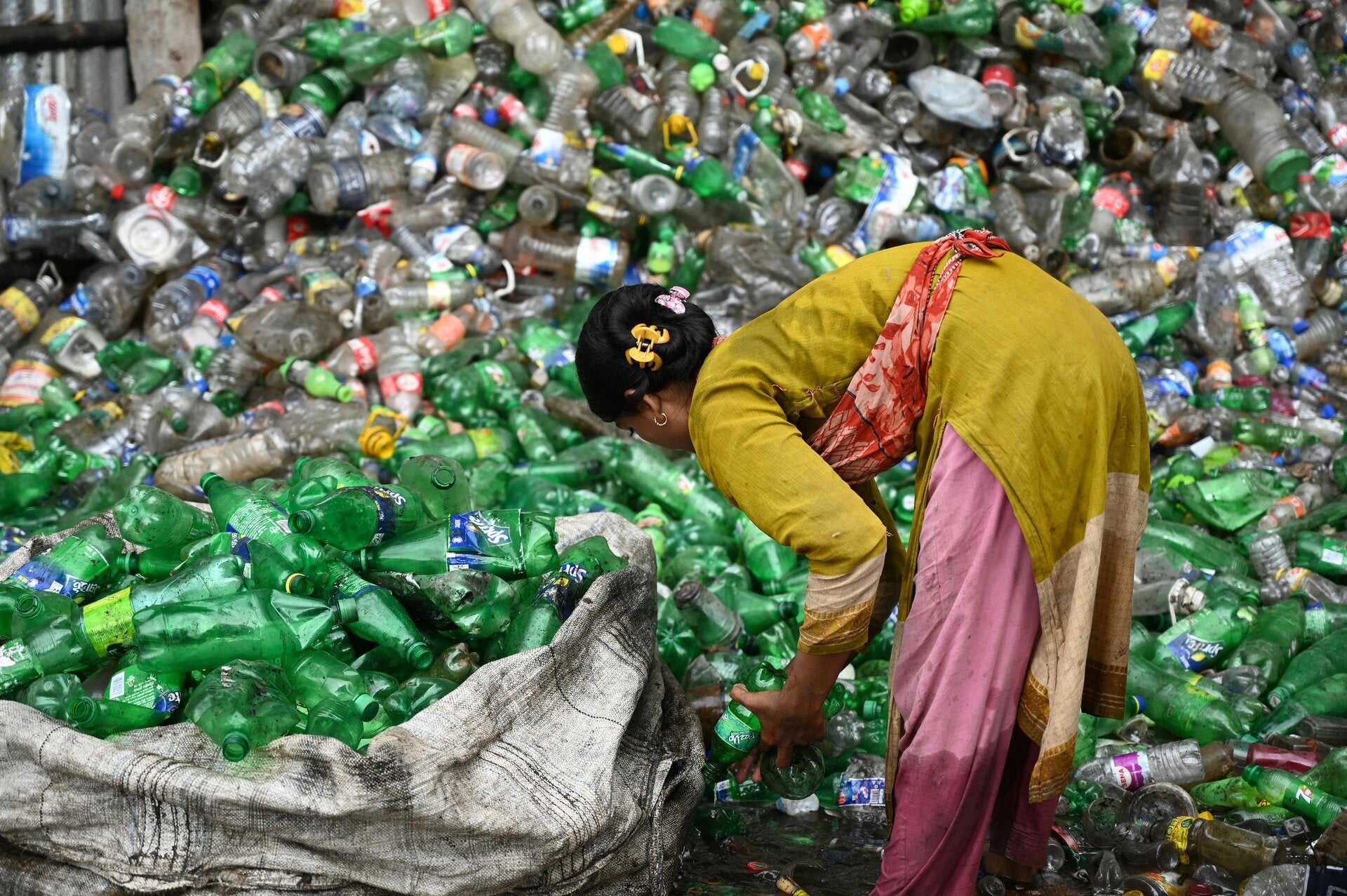
Bringing together researchers and practitioners from around the world, the paper examined an often-overlooked challenge: how rural, remote and lower-income communities experience and contribute to plastic pollution, particularly where formal waste collection and infrastructure are limited. It explored practical opportunities for improving waste management and developing locally appropriate circular-economy solutions.
The research reflects themes that have run throughout Simon's international work: waste management in underserved communities, plastics, island and remote systems, international development and the need for solutions that work within local realities rather than simply importing models developed for major cities.
ISWA World Congress, Singapore — 2008
In 2008, Simon Penney presented ideas at an International Solid Waste Association (ISWA) conference in Singapore exploring the relationship between waste management, professional expertise and international development.
At the heart of the presentation was a relatively simple question: how could the knowledge and experience of the international waste-management profession be made more accessible to communities in lower-income countries where inadequate waste services were having profound environmental, social and public-health consequences?
This was an early expression of an idea that would become an important thread running through Simon's subsequent career: that waste management is not simply a technical or environmental issue, but also an issue of development, inequality and human dignity.

Several years later, these ideas contributed to the thinking behind the creation of WasteAid. An archived presentation subsequently given by Simon records the historical connection explicitly, noting that the “initial idea [was] presented at [the] 2008 ISWA conference in Singapore.”
The Singapore presentation therefore represents an important milestone in Simon's professional journey. It demonstrates that his advocacy for bringing together the international waste profession and the development sector was being articulated publicly many years before this became a more established area of international waste and circular-economy practice.
The principle remains central to his work today: global expertise has greatest value when it can be translated into practical, locally appropriate solutions that improve people's lives.
Supporting archive:
The later WasteAid presentation recording the origins of the idea can be viewed here: Read Slides
Create Your Own Website With Webador